
HEALTHY SKIN IN 10 STEPS
Your skin is a complex and responsive organ that reflects your overall health and daily choices. Nutrition plays a major role in how your skin ages, stays hydrated, repairs itself, and maintains its structural resilience.
Chronological aging is caused by internal processes, while photoaging results from external stressors such as UV exposure, pollution, and smoking, all of which gradually damage the skin’s structure over time.
Certain nutrients, including vitamin C, omega-3 fatty acids, carotenoids, and fermented foods, can help improve skin health by strengthening the collagen network, optimizing hydration, and supporting antioxidant defenses.
Diets high in trans fats, sugar, refined carbohydrates, and additives can accelerate visible aging by promoting glycation, disrupting the microbiome, and weakening the skin’s ability to repair itself.
The sun is often blamed for skin aging, but the real issue may lie in nutrition. A poor diet, particularly one high in linoleic acid (LA), can make the skin more vulnerable to UV-related damage.
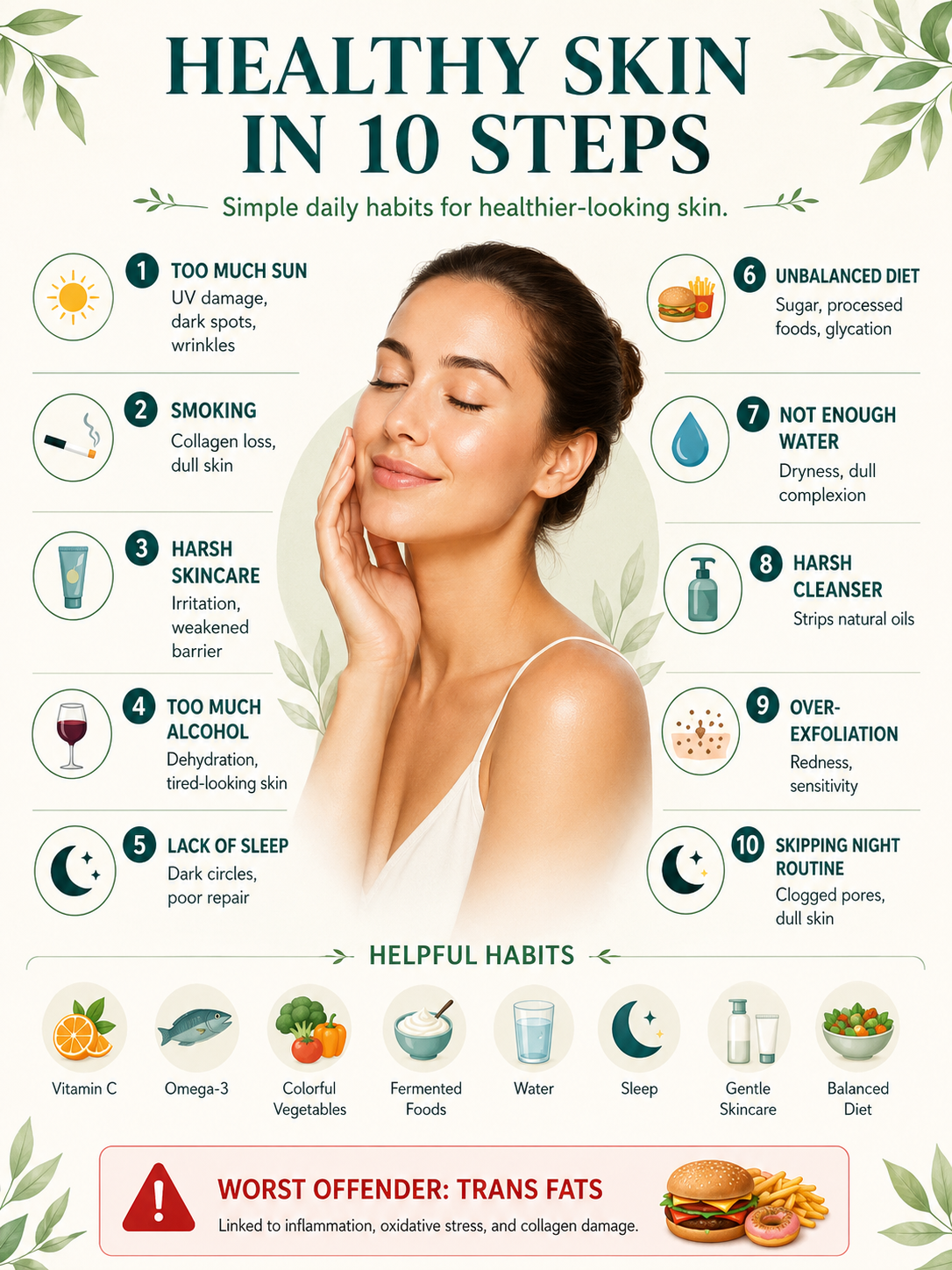
The 10 daily habits that accelerate skin aging
Certain everyday habits, often considered harmless and easily overlooked, can make your skin look older than it should.
And the most surprising part? Most of us engage in them without even realizing it.
Here are the 10 most harmful habits for the skin—and, more importantly, how to avoid them in order to maintain a younger-looking, brighter, and more radiant complexion.
Excessive sun exposure
UV rays are one of the leading causes of premature skin aging. Repeated sun exposure can cause cellular damage known as photoaging, which contributes to wrinkles, dark spots, loss of firmness, and rough skin texture.
Even on cloudy days, UV rays can affect the skin. Appropriate daily sun protection is therefore essential.
Smoking, including second-hand smoke
Cigarette smoke significantly accelerates skin aging. It breaks down collagen and elastin, two proteins that are essential for maintaining the skin’s flexibility and firmness.
Smoking also increases the production of free radicals, which contribute to oxidative stress and cellular aging. The result is skin that appears duller, less elastic, and more visibly wrinkled.
Using skincare products that contain harsh ingredients
Some cosmetics and skincare products contain irritating or controversial substances that may weaken the skin barrier.
Over time, these ingredients can make the skin more sensitive, dry, and vulnerable to external stressors such as pollution, cold weather, and UV rays.
Choose gentle products that are appropriate for your skin type and formulated with quality ingredients.
Excessive alcohol consumption
Alcohol contributes to dehydration, which directly affects the appearance of the skin.
Dehydrated skin often looks dull, tired, and more visibly lined. Over time, this can accentuate fine lines and reduce the complexion’s natural radiance.
Lack of sleep
Sleep plays an essential role in the skin’s repair and regeneration processes.
Not getting enough sleep may contribute to wrinkles, dark circles, uneven skin tone, and loss of elasticity. It may also weaken the skin barrier, making the skin drier and more reactive.
Getting enough sleep remains one of the best natural beauty habits.
An unbalanced diet
Nutrition directly influences the health and appearance of the skin.
A high intake of processed foods, refined sugars, and poor-quality fats may accelerate skin aging. Sugar, in particular, promotes a process called glycation, which contributes to the breakdown of collagen.
By contrast, a diet rich in antioxidants, healthy fats, vitamins, and colorful vegetables may help maintain healthier, more radiant skin.
Neglecting hydration
Water is essential for the proper functioning of every cell in the body, including skin cells.
Insufficient hydration can quickly make the complexion appear dry, dull, and less supple. Drinking enough water every day helps maintain better skin hydration and promotes a fresher-looking complexion.
Using an overly harsh cleanser
Cleansing the face is an important part of an effective anti-aging skincare routine. However, some cleansers remove too much of the skin’s natural oils.
Over time, this can weaken the skin barrier and make the skin more sensitive, dry, and prone to irritation.
It is preferable to use a gentle cleanser that respects the skin’s natural balance.
Over-exfoliating the skin
Exfoliation helps remove dead skin cells and restore radiance to the complexion. However, excessive exfoliation can have the opposite effect.
Exfoliants that are too abrasive or used too frequently may irritate the skin, cause redness, and damage the skin’s protective barrier.
Gentle, moderate exfoliation is generally sufficient to encourage cellular renewal.
Neglecting your evening skincare routine
The skin regenerates most actively at night. A suitable bedtime skincare routine can therefore make a meaningful difference in the skin’s appearance.
One of the most important steps is thoroughly removing makeup and the impurities that have accumulated throughout the day. Sleeping with makeup residue on the skin may clog pores, promote blemishes, and dull the complexion.
Spending just a few minutes caring for your skin in the evening may help preserve its radiance and vitality over the long term.
In conclusion
Skin aging is a natural part of life, but certain habits can accelerate it.
The worst offenders are trans fats. Found in processed foods, fried snacks, packaged baked goods, and many fast-food products, these fats are generally formed through the partial hydrogenation of vegetable oils, especially canola oil. They have been associated with increased oxidative stress and inflammatory responses, which may interfere with skin repair and contribute to the breakdown of structural proteins.
By adopting healthier lifestyle habits, eating a balanced diet, staying well hydrated, and using appropriate skincare products, it is possible to help maintain healthier, brighter, and younger-looking skin over time.
To help improve the condition of your skin, I invite you to include BioSil in your daily routine, one tablespoon twice a day, or Derma Lux, one scoop twice a day. For concerns such as eczema, psoriasis, or acne, BC-20 may be an appropriate option.
To your good health!

Colombe